
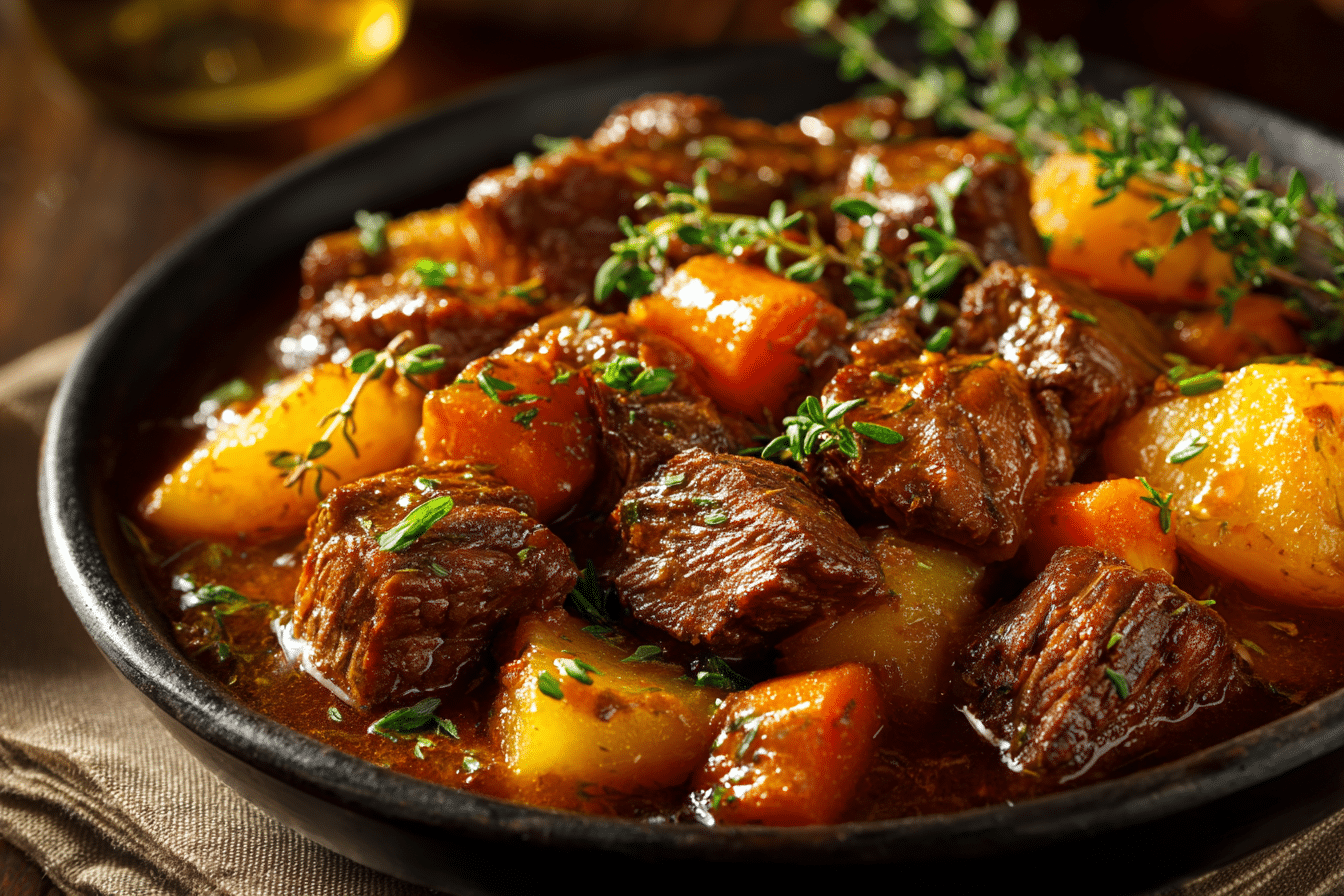
This Korean Style Pot Roast transforms a classic comfort dish into something irresistibly bold, savory, and mouthwateringly tender. Imagine a slow-braised chuck roast infused with Korean-inspired flavors — soy sauce, sesame oil, garlic, ginger, and a touch of sweetness — melting into fork-tender shreds in a glossy, flavorful sauce.
It’s hearty like the traditional American pot roast, but with the sweet-spicy depth of bulgogi or galbi marinade. Braised low and slow, this dish fills your kitchen with rich aromas and delivers maximum flavor with minimal effort.
Perfect for Sunday dinners, special gatherings, or meal prep, this Korean-style twist is a delicious way to reinvent a comfort food favorite.
Ingredients Overview
This recipe uses pantry staples and Korean flavor boosters to create deep umami and comforting richness.
Chuck Roast
-
Boneless Beef Chuck Roast (3–4 lbs): Well-marbled and ideal for slow cooking — it becomes melt-in-your-mouth tender.
-
Tip: Trim excess fat, but leave some for richness. Pat dry before browning for a better crust.
Aromatics & Base
-
Garlic (6 cloves): Essential for bold flavor.
-
Fresh Ginger (1 tbsp, grated): Adds brightness and gentle heat.
-
Yellow Onion (1 large): Adds natural sweetness and depth when cooked down.
Korean Sauce Blend
-
Soy Sauce (½ cup): Provides the savory umami base.
-
Brown Sugar (3 tbsp): Balances the saltiness and helps caramelize.
-
Sesame Oil (1 tbsp): Toasty, nutty aroma that’s essential to Korean cooking.
-
Rice Vinegar or Mirin (1 tbsp): Adds slight acidity to balance richness.
-
Gochujang (1–2 tbsp): Korean fermented chili paste — for heat, body, and depth.
-
Beef Broth (1 ½ cups): For braising — creates a flavorful, rich sauce.
Optional Add-Ins
-
Pear or Apple (½, grated): Adds a subtle sweetness, mimicking traditional Korean BBQ marinades.
-
Carrots & Daikon Radish: Classic root veggies that soak up the sauce beautifully.
-
Scallions & Sesame Seeds: For garnish and freshness.
Step-by-Step Instructions
1. Sear the Chuck Roast
Heat 2 tablespoons of neutral oil in a heavy-bottomed Dutch oven over medium-high heat.
Season the roast generously with salt and pepper, then sear on all sides until deep golden brown — about 3–4 minutes per side. Remove and set aside.
2. Sauté Aromatics
In the same pot, add:
-
1 chopped onion
-
6 minced garlic cloves
-
1 tablespoon grated ginger
Cook for 3–4 minutes, scraping up browned bits and stirring frequently until fragrant and softened.
Optional: Add ½ grated pear or apple for sweetness.
3. Mix the Korean Sauce
In a bowl, whisk together:
-
½ cup soy sauce
-
3 tablespoons brown sugar
-
1 tablespoon sesame oil
-
1 tablespoon rice vinegar or mirin
-
1½ cups beef broth
-
1–2 tablespoons gochujang
Pour over the aromatics in the pot. Stir and bring to a gentle simmer.
4. Braise the Roast
Return the seared chuck roast to the pot. Add:
-
Optional: sliced carrots or chunks of daikon radish
-
Ensure the liquid comes halfway up the meat; add more broth if needed.
Cover and braise:
-
Oven: 325°F for 3–3½ hours
-
Stovetop: Simmer on low, covered, for 3 hours, turning roast halfway through
The meat should be fork-tender and easily shredded.
5. Finish & Serve
Remove meat from pot. Let rest for 10 minutes, then shred or slice.
Simmer the sauce uncovered on the stovetop for 5–10 minutes to reduce and thicken slightly, if desired.
Return shredded beef to the sauce. Stir to coat and keep warm.
Top with sliced scallions and toasted sesame seeds.
Tips, Variations & Substitutions
Pro Tips
-
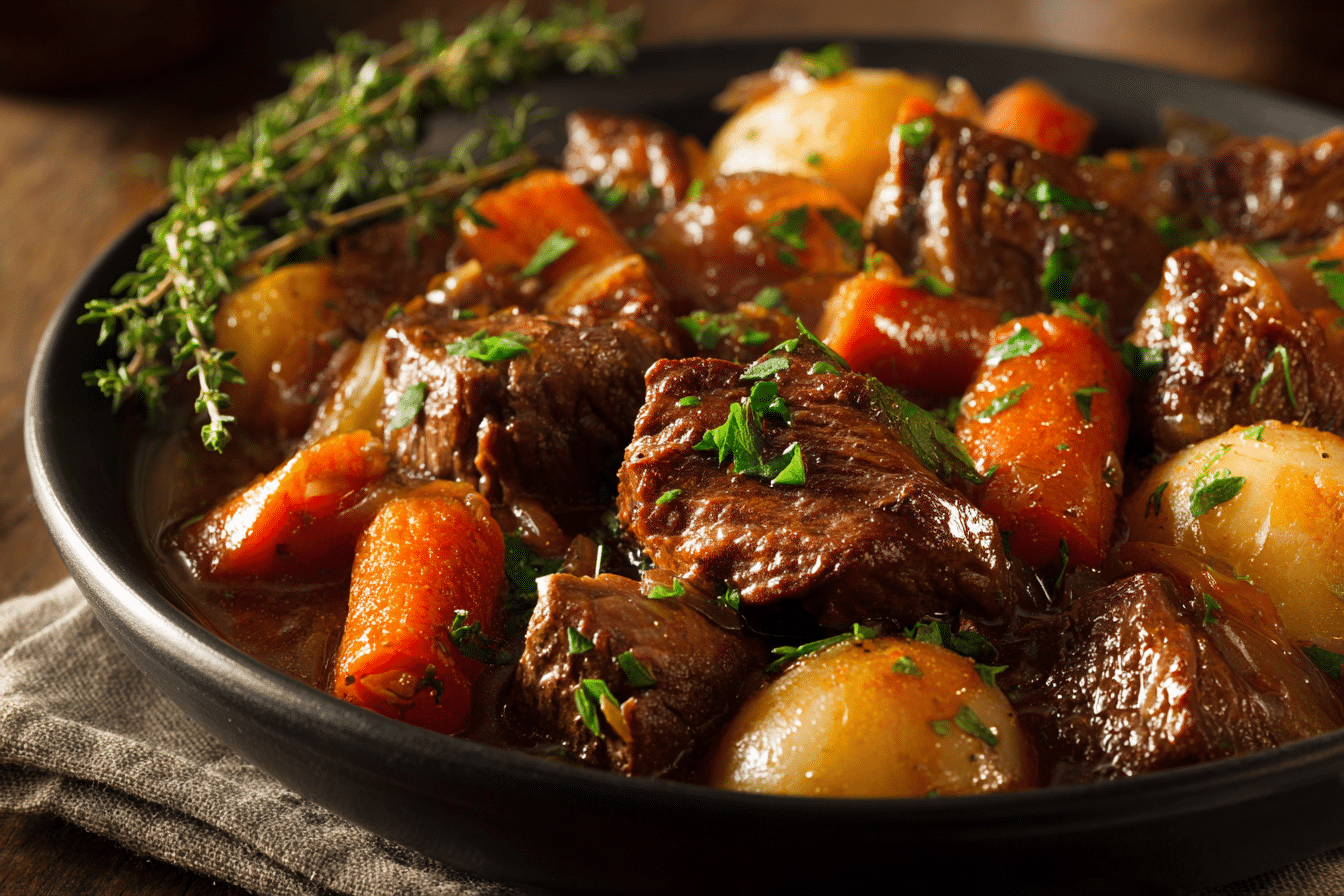
Sear for flavor: A deep brown crust on the roast creates flavor-packed fond in the pan.
-
Low and slow wins: Resist turning up the heat — gentle cooking breaks down the connective tissue for perfect tenderness.
-
Degrease before serving: If sauce feels too fatty, skim off the top with a spoon or chill briefly to solidify fat.
Variations
-
Korean BBQ-Inspired: Add extra brown sugar and grated pear for a sweeter, bulgogi-style flavor.
-
Spicy Version: Increase gochujang or add a teaspoon of gochugaru (Korean red pepper flakes).
-
Short Rib Swap: Use bone-in beef short ribs instead of chuck roast — incredibly flavorful and luxurious.
Substitutions
-
No Gochujang? Use sriracha mixed with a little miso paste or soy sauce for a similar umami-spicy effect.
-
No Beef Broth? Use chicken broth with a splash of soy sauce.
-
No Dutch Oven? Use a heavy pot with a lid, or braise in a covered roasting pan or slow cooker.
Serving Ideas & Occasions
This Korean pot roast is comforting and versatile. Serve it with:
-
Steamed white rice (jasmine or short grain)
-
Kimchi or pickled radish for a zingy contrast
-
Sautéed spinach or bok choy for color and balance
-
Lettuce wraps for a low-carb twist — add rice, beef, and kimchi to each wrap
-
Mashed potatoes if you want a cross-cultural fusion
Perfect for:
-
Cozy Sunday dinners
-
Meal prep (freezes and reheats well)
-
Entertaining guests with a twist on tradition
Nutritional & Health Notes
This dish is high in protein, iron, and flavor:
-
Chuck roast delivers 25–30g protein per serving
-
Gochujang and ginger have anti-inflammatory properties
-
Moderate sodium: Use low-sodium soy sauce if needed
To lighten it up:
-
Use less sugar and gochujang
-
Trim more fat from the roast
-
Serve in lettuce wraps with shredded veggies
FAQs
Q1: Can I make Korean pot roast in a slow cooker?
A1: Yes. Sear the meat and sauté aromatics first, then transfer everything to a slow cooker. Cook on low for 8–10 hours or high for 5–6 hours until tender.
Q2: Is it spicy?
A2: Mild to medium heat depending on how much gochujang you use. It’s flavorful, not overly spicy. Adjust to your heat preference.
Q3: Can I make this ahead?
A3: Absolutely. It tastes even better the next day. Cool completely and refrigerate for up to 4 days. Reheat gently with a splash of broth.
Q4: Can I freeze Korean pot roast?
A4: Yes. Freeze shredded meat in its sauce for up to 3 months. Thaw overnight and reheat on stovetop or microwave.
Q5: What cut of meat works best?
A5: Chuck roast is ideal — it’s marbled and tenderizes over long braising. Brisket or short ribs are also excellent options.
Q6: Can I skip gochujang?
A6: Yes, though it adds depth. Use a mix of sriracha + soy sauce + a pinch of brown sugar as a quick substitute.
Q7: Can I make this dish gluten-free?
A7: Use gluten-free tamari instead of soy sauce and check that your gochujang is gluten-free. Most are not unless labeled.
PrintKorean Style Pot Roast – Sweet, Savory & Fall-Apart Tender
A Korean-inspired twist on classic pot roast, this dish features tender, slow-braised beef in a bold soy-garlic-ginger sauce with hints of sesame, gochujang, and sweetness — perfect served over rice or in lettuce wraps.
Ingredients
-
3–4 lb boneless chuck roast
-
Salt & pepper to taste
-
2 tbsp oil
-
1 large onion, chopped
-
6 garlic cloves, minced
-
1 tbsp grated fresh ginger
-
½ cup soy sauce (low sodium)
-
3 tbsp brown sugar
-
1 tbsp sesame oil
-
1 tbsp rice vinegar or mirin
-
1½ cups beef broth
-
1–2 tbsp gochujang
-
Optional: ½ grated pear or apple
-
Optional: sliced carrots, daikon
-
Garnish: scallions, sesame seeds
Instructions
-
Pat roast dry and season with salt and pepper. Sear in hot oil until browned on all sides. Set aside.
-
Sauté onion, garlic, and ginger until fragrant. Stir in grated pear (optional).
-
Add soy sauce, brown sugar, sesame oil, vinegar, broth, and gochujang. Simmer.
-
Return roast to pot. Add vegetables if using. Cover and braise at 325°F for 3–3½ hours until fork tender.
Notes
-
Serve over rice or in lettuce wraps.
-
Adjust heat with more or less gochujang.
-
Freeze leftovers for up to 3 months.